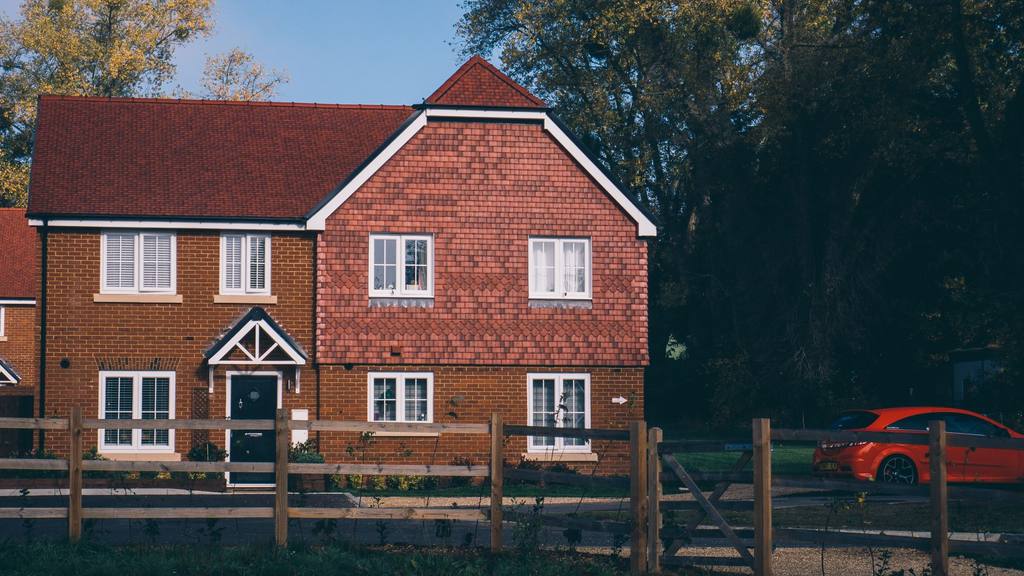
Photo by Ryan Collis on Pexels.
Building your own house in London is rarely cheap, but the tax and levy system offers two substantial reliefs aimed squarely at people building a home for themselves. The first is an exemption from the Community Infrastructure Levy (CIL), the charge councils and the Mayor of London levy on new floorspace. The second is HMRC's DIY housebuilders scheme, which lets you reclaim VAT on many building materials.
Both are generous. Both are also procedural: miss a step or a deadline and the relief can be lost outright. This guide explains how each works, the order in which things must happen, and what to agree with your builder so that invoices and paperwork support your claims. It is based on GOV.UK guidance checked on 21 October 2026. It is not tax advice, and the amounts at stake justify having an accountant or CIL specialist check your position.
Part one: the CIL self-build exemption
Why it matters in London
Government guidance on the Community Infrastructure Levy explains that London is the only place where a strategic authority - the Mayor - may set a levy in addition to the local borough's own CIL. A new house in London can therefore be liable for two levies, charged per square metre of new floorspace. Small development under 100 square metres is generally exempt, unless it creates a new dwelling - so a new house is usually caught, however modest.
The self-build exemption can remove that liability, but only if the procedure is followed exactly.
Who qualifies
The guidance says the exemption is available to anyone who builds or commissions their own home for their own occupation. You do not have to lay the bricks yourself; using a main contractor is fine. You must own the property and occupy it as your principal residence for at least 3 years after completion.
The four steps, in order
The guidance sets out four steps. The first three must all happen before you start work on site:
- Assume liability for the levy by submitting an Assumption of Liability form (Form 2), or a Transfer of Assumed Liability (Form 4) if liability was previously in someone else's name.
- Claim the exemption with a Self-Build Exemption Claim (Form 7, Part 1), certifying that it is a self-build project, that you will live there as your principal residence for 3 years, and that you will provide evidence on completion. Wait for the collecting authority to confirm the exemption in writing: the guidance warns that if development commences before you are notified of the decision, the relief would be cancelled.
- Submit a Commencement Notice (Form 6), which must be received by the collecting authority before the date works start. Failing to do this triggers a surcharge of 20% of the levy that would have applied, or £2,500, whichever is lower.
- After completion, submit Form 7 Part 2 with supporting evidence within 6 months of the date of the building control completion or compliance certificate. If it is late, the full levy becomes payable.
The evidence you will need at the end
The Part 2 evidence includes the completion certificate, proof of ownership, a council tax bill and two further proofs of occupation, plus one of: an approved HMRC VAT431NB claim, a specialist self-build warranty, or an approved self-build mortgage. In other words, the two reliefs in this guide are linked - an approved VAT refund is one of the standard ways of proving a CIL self-build.
The three-year clawback
If you sell or let the whole house within the 3-year period, or it otherwise stops meeting the criteria, that is a "disqualifying event". You must notify the charging authority within 14 days and the full levy becomes payable; failing to notify can add a surcharge. Plan your finances on the assumption that you will live there for at least three years.
What counts as "starting"
Commencement has a legal meaning that can be triggered by modest works, including some demolition or groundworks. Do not let your builder "just get the site cleared" or dig trial trenches until you have checked with the borough's CIL team that this will not count as commencement. This is the most common way the exemption is lost.
Part two: reclaiming VAT as a DIY housebuilder
How the scheme works
HMRC's guidance for DIY housebuilders explains the logic: if you buy a new house from a developer, the sale is zero-rated for VAT; if you build your own, you cannot benefit from zero-rating on the sale, so the scheme lets you reclaim VAT on qualifying building materials instead. You need planning permission for a new dwelling to be used as a home by you or your relatives. A house built to sell or let does not qualify.
The deadline and the single claim
According to GOV.UK, for buildings completed on or after 5 December 2023 you must claim no more than 6 months after completion (it was 3 months before that date). You can make only one claim, so gather everything before you submit. HMRC treats the date of the completion certificate (or other evidence you provide) as the start of the 6 months. Claims are made online or on form VAT431NB.
What you can and cannot claim
You can claim VAT on building materials incorporated into the building or its site - including items such as drainage, main paths, driveways, retaining walls and boundary walls and fences. HMRC lists exclusions, including most fitted furniture other than kitchen furniture, free-standing appliances, carpets, and leisure features such as swimming pools and tennis courts.
Why your builder's invoices matter
HMRC is explicit that a contractor's services in constructing a new qualifying dwelling are zero-rated, and so are the materials they supply and install. Two consequences follow:
- If your builder charges you 20% VAT on the construction of your new house, that is likely to be wrong - and HMRC says VAT charged incorrectly cannot be reclaimed under the scheme. The supplier must correct it. Raise this before you pay the first invoice, not at the end.
- Where you buy materials yourself and hand them to the builder, you need proper VAT invoices showing the supplier's VAT number, and for items over £250, your name and address. Keep every invoice; HMRC will ask for a schedule and may request copies.
HMRC's general guidance on buildings and construction (VAT Notice 708) is worth sharing with your builder at quotation stage so that everyone is working from the same rules.
Demolition and replacement dwellings
Many London self-builds replace an existing house. HMRC's guidance says a building is "constructed" from scratch when any pre-existing building is demolished completely to ground level (cellars, basements and the ground slab may be kept), with narrow exceptions for a retained façade required by planning. Party walls shared with a neighbouring property that is not being developed can be ignored. A project that keeps more of the old house may instead be treated as an alteration, with different VAT consequences, so take advice before finalising the design.
Choosing a builder who will get this right
A builder experienced with new houses should understand zero-rating, the need for clear itemised invoices and the timing of commencement. When vetting candidates:
- ask how they will invoice a new-build dwelling for VAT, and expect a clear answer;
- agree in writing that no work, including demolition or site clearance, starts until you confirm your CIL commencement notice has been received;
- check the company on Companies House and confirm the name on the quote matches the VAT invoices you will receive;
- ask for references from previous self-build clients, not only from developers;
- confirm who will arrange building control and how stage inspections tie to your warranty provider's requirements, since a self-build warranty is also one of the evidence routes for the CIL exemption.
A simple timeline
- Before buying the plot: check the planning position and ask the borough's CIL team how CIL would apply.
- Planning granted: read the CIL liability notice; submit Form 2 and Form 7 Part 1; wait for written confirmation.
- Before any works: submit Form 6 so it is received before your start date; confirm receipt.
- During the build: keep every VAT invoice and payment record; make sure the builder's invoices are zero-rated where appropriate.
- Completion: obtain the building control completion certificate; note the date.
- Within 6 months: make your single VAT431NB claim and submit CIL Form 7 Part 2 with the required evidence.
- For 3 years: live in the house as your principal residence, or notify the authority within 14 days if that changes.
Sources (checked 21 October 2026): GOV.UK, Community Infrastructure Levy guidance (self-build exemption, paragraphs 082 to 094); GOV.UK, Reclaim VAT on a self build home; HMRC, VAT refunds for new builds if you're a DIY housebuilder (updated 19 October 2026); HMRC, VAT Notice 708; Companies House. Information only; not tax or legal advice.
Quick answers
Can I claim the CIL self-build exemption after work has started?
No. Government guidance says the exemption must be applied for and obtained, and a commencement notice received by the collecting authority, before development commences. Starting first means the exemption will not be obtained.
How long do I have to claim VAT back on a self-build?
For buildings completed on or after 5 December 2023, HMRC says you must claim no more than 6 months after completion, and you can make only one claim under the DIY housebuilders scheme.
Should my builder charge VAT on building a new house?
HMRC guidance says a contractor’s services in constructing a new qualifying dwelling are zero-rated, as are building materials they install. VAT charged in error cannot be reclaimed from HMRC; it must be corrected by the supplier.