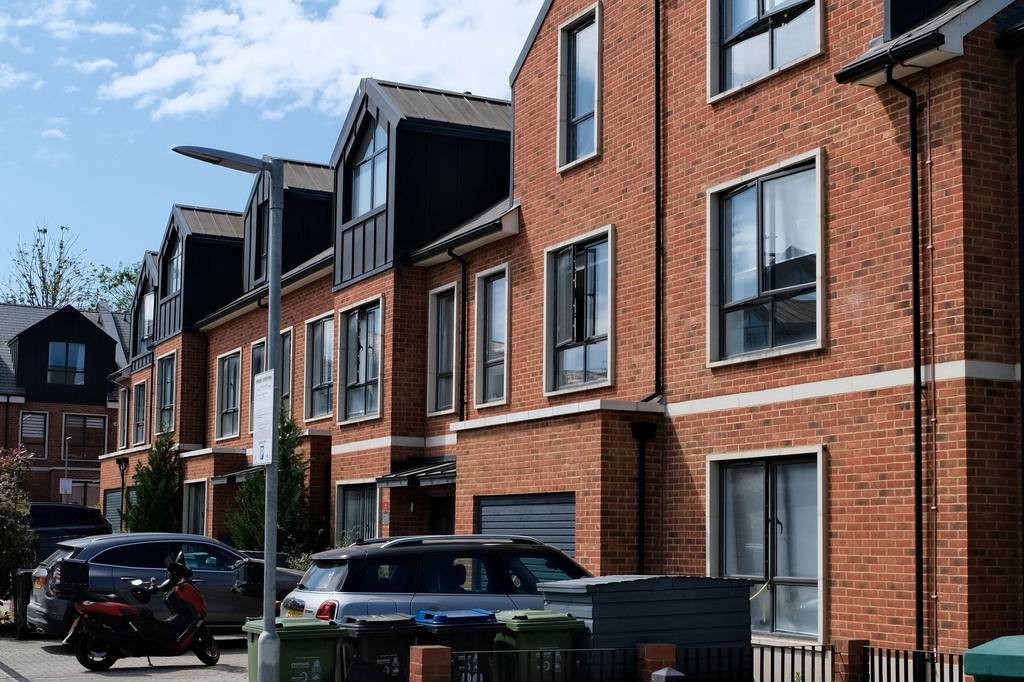
Photo by Lewis Kang'ethe Ngugi on Pexels.
Buying from a developer is very different from building your own house. You are not managing a contractor; you are buying a finished product under a contract drafted by the seller. That makes the paperwork - and the codes the developer has signed up to - unusually important. This guide covers the London buyer's journey from reservation to the end of the two-year after-sales period. Sources were checked on 28 October 2026.
If you are instead commissioning your own house on a plot, our pages on building a new house in London and new-build questions are the better starting point.
How satisfied are new-build buyers?
The Home Builders Federation's 2026 customer satisfaction results, published on 24 March 2026, report that 93% of buyers would recommend their builder to a friend, 90% were satisfied with the quality of their home and 88% with the builder's after-sales service. The survey is sent to buyers eight weeks after completion, and HBF says the results are independently verified by Ipsos. The same announcement notes that most customers reported some issues with their home. In other words: the majority of buyers end up content, but a snag list is normal, and how it is handled is what matters.
The New Homes Quality Code: what developers promise
The New Homes Quality Board (NHQB) runs the New Homes Quality Code, and HBF says around 250 builders have signed up voluntarily. Version 2 of the Code applies from March 2026, and the NHQB's quick guide summarises it for buyers. Its protections run from reservation until two years after completion. The headline commitments include:
- No high-pressure selling. Buyers who attend a time-limited launch event must be given seven days to consider the purchase, with the incentive (though not any particular home) held open for them, and the Code prohibits "drip pricing" of elements buyers would reasonably expect to be included.
- A written reservation agreement with a 14-day cooling-off period and a full refund if you cancel within it. After that, any refund may be reduced only by deductions stated in the agreement, and should be paid within 14 days.
- Time to exchange. The reservation agreement must give a reasonable exchange date, and not less than six weeks after reservation (28 days plus the 14-day cooling-off period) unless you ask for an earlier date.
- Capped "early bird" fees of no more than £150 for registering interest before release.
- Protected deposits, held under the warranty provider's cover or in a client account, and refunded within 28 days where a contract is properly cancelled.
- Free choice of solicitor - the developer must not insist on its recommended firm.
- A pre-completion inspection, carried out by you using the NHQB checklist or by a suitably qualified inspector.
- A right to cancel for major changes. If the developer makes a significant change to the home after exchange, you can cancel within 14 days and receive a full refund.
- No completion on an unfinished home, and most after-sales problems should be settled within 30 days unless there is a significant reason for delay.
- Two years of after-sales service, with a complaints procedure leading, if necessary, to the New Homes Ombudsman.
Not every developer is registered. Ask at the sales office, in writing, whether the developer is registered with the NHQB, and check the developer's name on the register. Some smaller builders instead follow the Consumer Code for New Homes, which has its own dispute scheme, and a few follow neither. That is a material difference when something goes wrong.
Warranties: what they cover and what they do not
Most new homes are sold with a ten-year warranty from a provider such as NHBC, not least because mortgage lenders usually expect one. NHBC's Buildmark cover is a useful model of how these usually work:
- Before completion - insolvency cover between exchange of contracts and legal completion.
- Years 0-2 - the builder warranty period, during which the builder is liable to put right reported defects (breaches of NHBC requirements), with NHBC guaranteeing the builder's obligations.
- Years 3-10 - eight years of insurance cover for damage caused by defects in specific parts of the home described in the policy, such as foundations.
Warranties also have exclusions. NHBC lists gradual deterioration and wear and tear, later alterations such as extensions and loft conversions, damage from fire, smoke or severe weather, and matters covered by other insurance; certain insurance claims are also subject to a minimum claim value. A warranty is therefore not a substitute for a proper snagging inspection, buildings insurance or the developer's own after-sales obligations.
A London buyer's checklist
Before you reserve
- Confirm in writing whether the developer is registered with the NHQB, or which other code applies.
- Ask which warranty provider will cover the home, and whether the block or development has been registered with it.
- For a flat, ask for the lease length, service charge budget, estate charges and any ground rent. The Leasehold Reform (Ground Rent) Act 2022 restricts ground rent on most new long residential leases granted on or after 30 June 2022 to a peppercorn, but your solicitor should confirm how it applies to the specific lease.
- Get the price, incentives and any extras in writing, and note the date any launch incentive expires.
Between reservation and exchange
- Instruct your own solicitor. Ask them to check the warranty, the planning and building control position, the specification and the long-stop completion date.
- Use the 14-day cooling-off period to think, not to negotiate under pressure.
- Keep a written record of every promise from the sales team; if it matters, ask for it to be added to the contract.
Before completion
- Book the pre-completion inspection. The Code notes that the standard checklist was designed for professionals and that a buyer doing it alone may miss or interpret some requirements differently, which is why many buyers appoint a suitably qualified inspector. Issues that breach the warranty standards should ideally be fixed before completion, or within 30 days if not.
- Look at the things that are expensive to fix later: drainage falls on balconies and terraces, sealant around windows and wet rooms, gaps in finishes, missing insulation in accessible lofts, and the operation of every door and window.
- Do not complete on a home that is plainly unfinished; the Code says you should not be asked to.
After you move in
- Report snags in writing, with photographs, and keep a dated log.
- Where the Code applies, developers must in most situations settle after-sales issues within 30 days, and explain any significant delay with at least monthly updates; chase politely in writing if they do not.
- Diarise the end of year two: that is when the builder's primary responsibility under most warranties ends.
When things go wrong: the complaint route
Start with the developer's own complaints procedure, which registered developers must operate. Put the complaint in writing and ask for a reference number. If you are not satisfied, the New Homes Ombudsman Service can consider complaints about registered developers. It is free for buyers, and the Code allows you to escalate once you have received a closure letter or once 56 days have passed since your complaint without one. The ombudsman also offers free mediation in suitable cases.
For developers following the Consumer Code for New Homes instead, its own independent dispute resolution scheme applies, with time limits set out on its website. Where defects fall within the warranty, the warranty provider's resolution service is a separate route, and the warranty documents explain how it interacts with any ombudsman complaint.
The short version
Check the code and the warranty before you reserve; use the cooling-off period; choose your own solicitor; inspect before completion; and put everything in writing. Developers who have signed the New Homes Quality Code have made specific promises. Holding them to those promises, calmly and on the record, is usually all it takes.
Sources (checked 28 October 2026): HBF, New build homeowners report high levels of satisfaction (24 March 2026); NHQB, New Homes Quality Code version 2 (March 2026); NHQB, A quick guide to the Code; New Homes Ombudsman Service, for customers; NHBC, Buildmark cover; Consumer Code for New Homes; Leasehold Reform (Ground Rent) Act 2022. Information only; not legal advice.
Quick answers
Can I get my reservation fee back on a new-build?
Under the New Homes Quality Code (version 2, March 2026), a reservation agreement must be in writing and you have 14 days to cancel it and receive a full refund. If you cancel after that, the developer may keep only the deductions stated in the reservation agreement, and the balance should be repaid within 14 days.
Should I pay for a professional snagging inspection?
The Code entitles you to a pre-completion inspection before you complete, which you can carry out yourself using the NHQB checklist or through a suitably qualified inspector. Many buyers of larger London homes choose a professional; whoever does it, the point is to record defects in writing before completion.
When can I complain to the New Homes Ombudsman?
If your developer is registered with the New Homes Quality Board, you can go to the New Homes Ombudsman Service once you have had a final response (closure letter) to your complaint, or 56 days after first complaining if you have not. The service is free for buyers.